Beginner Quick Answer
- The game was released September 3, 2026 for PC, PlayStation 5 and Xbox Series X|S.
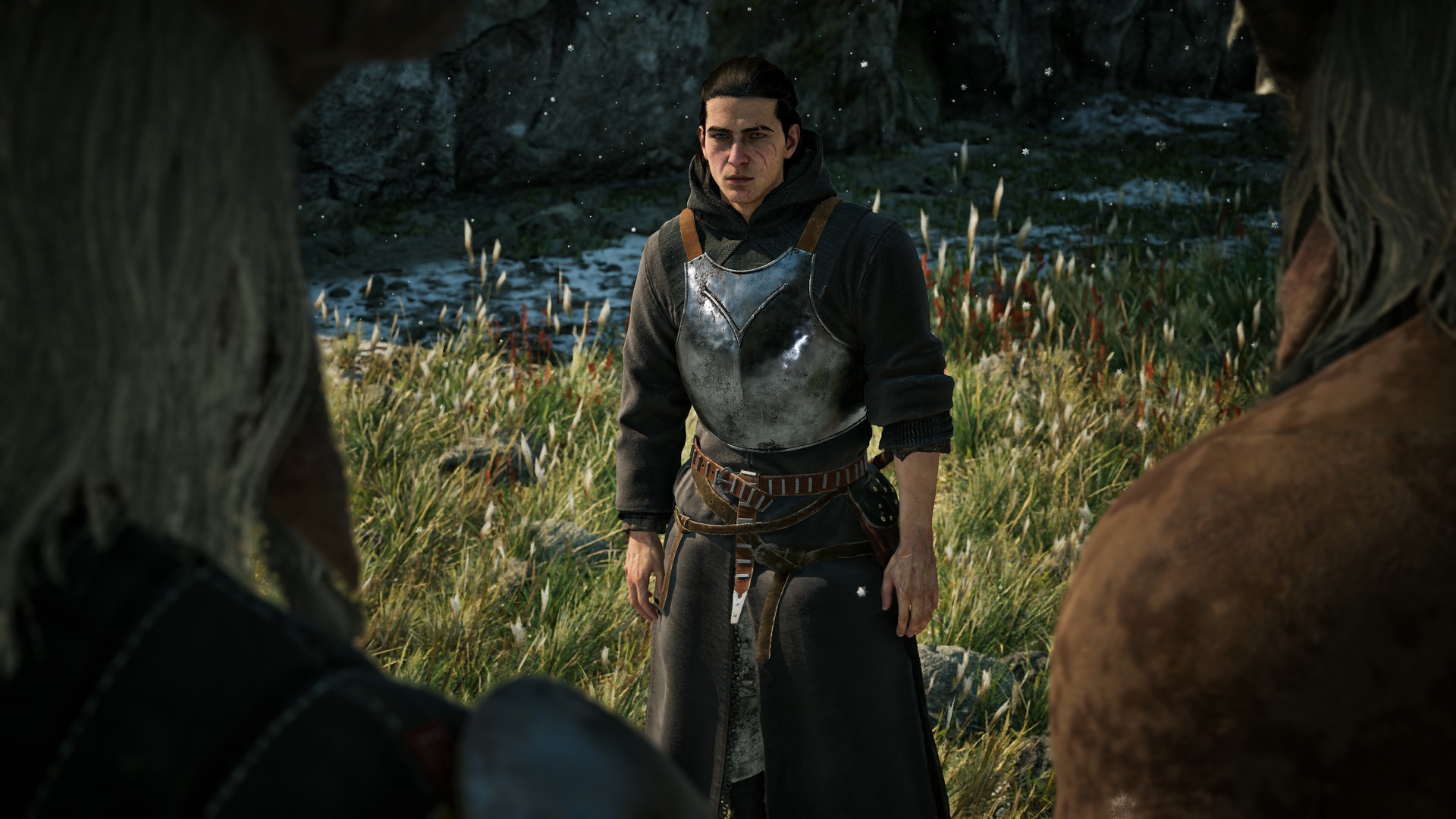
- You play as Coen, a young man transformed into a Dawnwalker while trying to save his family.
- Coen is human by day and vampire by night, with distinct abilities and approaches in each phase.
- The central objective unfolds across 30 days and 30 nights of in-game time.
- Free exploration does not run down the deadline like a real-time stopwatch; marked actions advance time.
- Official material stresses that action and inaction shape the story, so one route is not expected to contain everything.
- Combat supports both adaptive omniattack and omniblock controls and a precision-focused directional mode.
- At night, blood hunger affects Coen's vitality and abilities; official sources confirm several feeding options.
1. Understand Who Coen Is
Coen is not a conventional vampire hero. Official material describes him as a young man turned into a Dawnwalker: no longer fully human, but not fully a vampire either. His immediate motivation is personal rather than heroic in the abstract. A vampire ruler has taken his family, and the 30-day structure gives his attempt to save them a visible cost.
That divided condition is the organizing idea behind both combat and exploration. During the day Coen relies on human abilities, swordplay and magic; at night his supernatural powers become available. Treat those forms as two toolsets belonging to the same character, not as a simple weak mode and strong mode. The world, available approaches and reactions around him can change with the phase.
2. Day and Night Change How You Play
Rebel Wolves describes day and night as two different gameplay loops. Different abilities, mysteries and ways of reaching an objective become available depending on the phase. Official demonstrations have shown the same broad objective approached differently as a human during the day and as a vampire after dark, reinforcing that time of day is a route decision rather than a cosmetic lighting change.
Hands-on previews indicate that some people, activities and opportunities may be tied to a particular phase. Before committing to an objective, check whether you want the human or vampire approach and whether changing phase has a displayed time cost. Route-specific exceptions are not yet documented here, so avoid assuming that every objective supports both forms equally.
3. Choose the Combat Controls That Fit You
Bandai Namco's August 2026 feature overview confirms two control approaches. Adaptive omniattack and omniblock let Coen attack or defend with a button while the system handles direction. Players who want more direct control can use directional combat, where attack angle, timing, precise parries and ripostes matter.
The underlying fight still changes with Coen's form. Human combat combines swordplay with magical runes, while vampire combat uses claws and supernatural powers. Official demonstrations stress observation, blocking and counterattacks rather than treating either form as an invulnerable power mode.
4. Treat Time as a Resource
The 30-day structure is not background flavor. The official site states that time moves forward when you take on quests, pushing Coen closer to the deadline. Bandai Namco's gameplay recap adds that activities show an hourglass indicating how much they will advance the world when completed. Time therefore behaves more like a limited story currency than an always-running survival clock.
A useful beginner habit is to compare an activity's visible cost with what you want from the current phase. Record important opportunities before spending time, especially when a choice, character or night-only approach matters to you. The goal is not to solve the entire game in a spreadsheet; it is to make deliberate decisions instead of losing track of why the clock moved.
5. Exploration Is Not a Real-Time Countdown
The clearest point from hands-on coverage is also the most reassuring: walking around, looking at the map and exploring the world does not continuously drain the 30-day limit. Xbox Wire reports that the clock does not advance in real time while you run around. Instead, quest actions consume one or more units, with the cost shown before the commitment through hourglass icons.
That means curiosity is not automatically a mistake. You can learn routes, inspect settlements and search the landscape without treating every second outside a quest as wasted time. Exploration may reveal information that changes what you choose to do next. Still, distinguish free roaming from an interaction that explicitly shows a cost; once the interface warns that an action advances time, make the choice consciously.
6. Check Time Costs Before Committing
The hourglass is the most important interface signal described in official coverage. Bandai Namco says each activity displays how much it will push the world forward on completion. PlayStation's developer feature likewise notes that major actions—including some quests, dialogue decisions and even certain ability-learning choices—can carry a visible time cost.
Read that indicator before confirming an action, then decide whether the cost supports your current goal. Do not rely on an external guide that lists exact costs without a reproducible route: values may differ by activity, context or version. This site's Planner therefore leaves time cost as a manual field. Enter only the value actually shown in your game and revise it when your route provides better evidence.
7. Do Not Expect to Complete Everything
The official site is direct: you will not have time for everyone. Action and inaction shape the world, and choosing whom to help also means leaving something else unresolved. This is a narrative design principle, not merely a failure condition. The 30-day budget gives decisions weight because the usual open-world answer—finish every marker before advancing the story—is not guaranteed to be available.
For a first playthrough, define a few priorities instead of chasing perfect completion. You might protect a character, pursue a mystery, favor a human or vampire route, or reserve time for a lead that matters to Coen's family. Preview material strongly suggests that mutually exclusive opportunities are part of the intended experience. Exact completion percentages and route limits remain unverified and should not be treated as promises.
8. Human and Vampire Playstyles Both Matter
Official descriptions give both halves of Coen's identity meaningful strengths and weaknesses. By day he can fight with a sword and use magic; by night he gains brutal supernatural abilities and new movement options. The important beginner lesson is to adapt rather than treating the vampire phase as a universal upgrade. A human approach may fit a social space or direct route that becomes hostile or inaccessible after dark.
Avoid committing to a so-called best build until the full skill trees and balance are documented from repeatable play. Instead, note which problems each current ability solves and keep enough flexibility to operate in both phases. Official and preview material establishes the design intent, but it does not prove every damage value or unlock order. This guide deliberately makes no claims about optimal skills, weapons or stat allocation.
9. Manage Blood Hunger at Night
Rebel Wolves' official gameplay deep dive confirms that Coen's blood hunger intensifies at night. He can feed on defeated enemies, including vampires, as well as villagers or animals, and can also use blood vials. These are mechanical and moral options rather than a single mandatory feeding target.
Leaving the hunger unsatisfied weakens Coen's abilities and vitality. At critical moments he can lose control, potentially causing the death of an important story character. Treat hunger as a route resource: decide how you intend to feed before entering a long night objective. Current public sources still do not establish the exact thresholds and numbers for every situation.
10. Choices and Inaction Can Matter
The official site says every action—and every inaction—shapes the world. PlayStation's developer feature adds that some dialogue choices have visible time costs, while different characters and objectives can become available at different phases. A decision is therefore broader than selecting a line in a conversation: choosing where not to spend time may close a possibility just as surely as an explicit answer.
Track decisions you care about, but do not assume an outcome before you see it. Record the day, phase, people involved and what the game actually communicated. Separate your observation from a guessed consequence. That habit produces a useful personal route now and reliable community documentation later, without turning early speculation into false guide information.
11. Explore Vale Sangora Without Panicking
Vale Sangora is presented as a hand-crafted open world of forests, plains, swamps, mountains, settlements and older ruins. The game invites discovery, and the non-real-time nature of free roaming means the world is not asking you to sprint between objectives. Use exploration to understand geography, find leads and decide which story costs are worth paying.
A practical rhythm is to explore until you identify several meaningful options, then compare their phase and displayed time cost. You do not need to clear an area like a checklist before moving on. This site's map remains a clearly labeled concept preview while coordinates are checked against the released game; use the in-game map as the authority until a marker is explicitly marked verified here.
12. Prepare for Multiple Playthroughs
A story shaped by limited time, different day and night approaches, and meaningful inaction naturally supports routes that leave unseen material behind. Rebel Wolves repeatedly frames the game around making the story your own rather than discovering one canonical checklist. A second playthrough can prioritize people and methods that the first route could not accommodate.
That does not mean you must plan multiple runs before starting. Finish one route according to a coherent set of priorities, keep notes on the questions you intentionally left open, and revisit them later if the game earns another playthrough. Claims about exact endings, route locks or New Game Plus remain excluded until they can be supported by reproducible released-game evidence.
30-Day System Quick Reference
- The deadline covers 30 in-game days and nights tied to Coen's family objective.
- Free roaming does not continuously consume the deadline like real-world elapsed time.
- Marked quest steps and other significant actions can advance time.
- Hourglass indicators communicate a cost before relevant actions are completed.
- Changing between day and night can itself move time forward, according to official gameplay coverage.
Day vs Night Comparison
Official material establishes the high-level contrast, while the exact availability of each objective still has to be documented route by route.
- DAY — Coen is human, with swordplay and human magic. Social access, abilities and routes can differ from the night phase.
- NIGHT — Coen's vampire powers emerge, opening supernatural combat and movement possibilities while changing how the world responds to him.
- BOTH — choices, time costs and preparation still matter. Neither phase is presented as the single correct way to play.
What Still Needs Route-by-Route Verification
This guide remains intentionally conservative after launch. Public sources do not yet document the complete skill trees, exact time costs, every expiring activity, specific choice consequences, detailed progression rules, difficulty behavior or the completion ceiling for one route. Those details should be added from reproducible play and official patch information, not copied from speculation.
Sources & Further Reading
This guide separates official statements from hands-on preview observations. Details that still require release-build verification are identified in the text.
- The Blood of Dawnwalker — Official Game WebsiteRebel Wolves / Bandai Namco Entertainment
- The Blood of Dawnwalker now available on PC, PS5 and Xbox Series X|SBandai Namco Entertainment Europe · 2026-09-03
- The Blood of Dawnwalker — Gameplay Reveal RecapBandai Namco Entertainment Europe
- Choices and consequences in The Blood of DawnwalkerPlayStation Blog · 2026-04-28
- The Blood of Dawnwalker: Dead and Loving ItXbox Wire · 2026-07-07
- Explore The Blood of Dawnwalker's Features Ahead of ReleaseBandai Namco Entertainment Europe · 2026-08-13
- Gameplay Deep Dive of The Blood of DawnwalkerRebel Wolves · 2026-08-11